Contact
- mbsue@gate.sinica.edu.tw
- (L) 886-2-2789-9218
- 419, Institute of Molecular Biology, Academia Sinica
Research
Cell Growth Control
I. RNA Decay
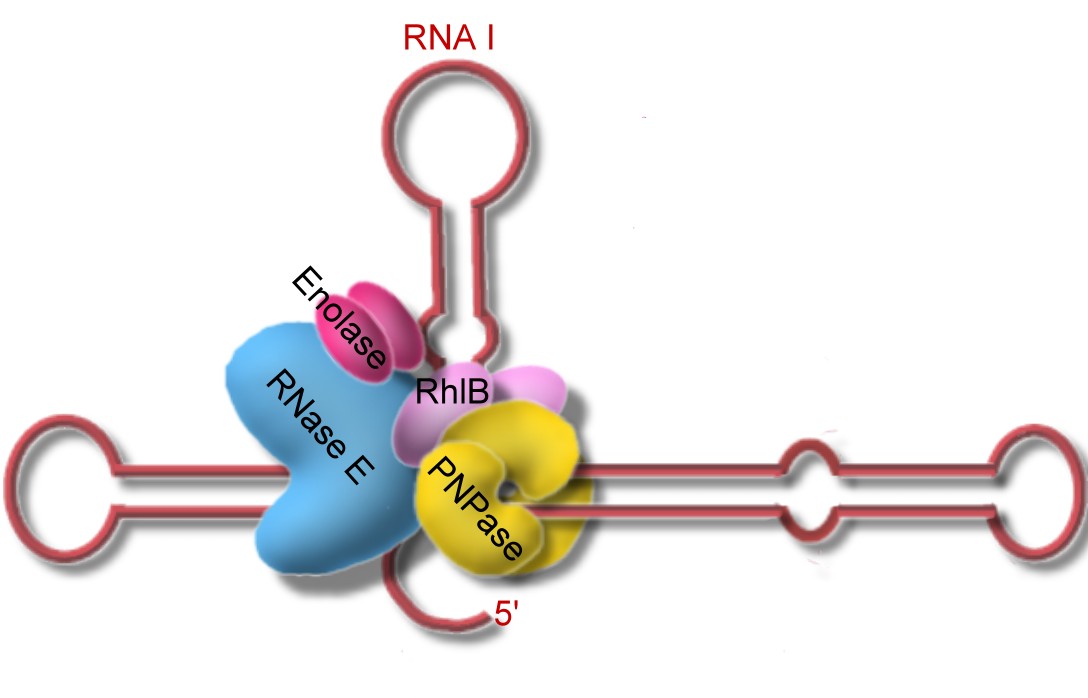
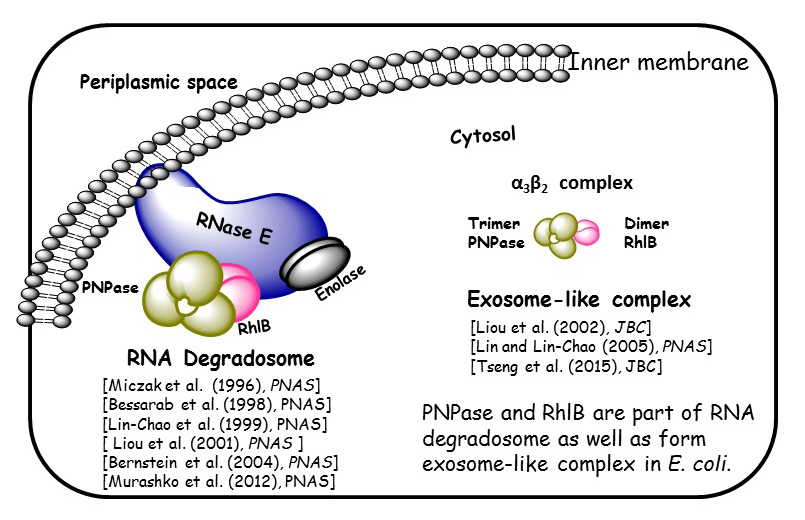
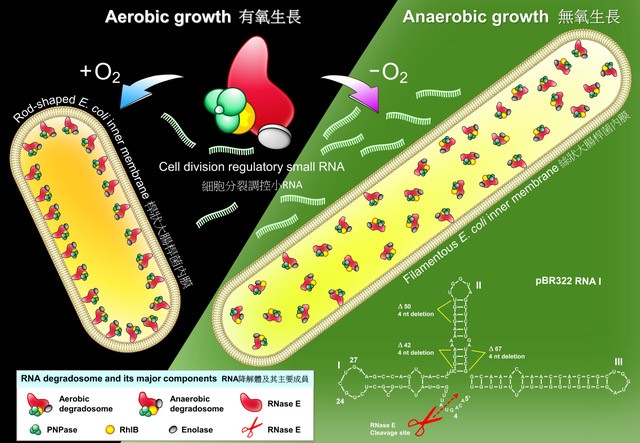
One of our research interests relates to the mechanism of RNA decay and its important role in gene regulation in bacteria. Using genetics, molecular biology, biochemical and genome-wide approaches, we demonstrated the important roles of RNA decay in the control of DNA replication of ColE1-type plasmids and for normal cell growth; isolated and characterized the "RNA degradosome", a cytoplasmic membrane-bound multicomponent ribonucleolytic complex; proved the existence of RNA degradosome complex in vivo and working together as an integral machinery to sustain a normal RNA metabolism. Our current investigations are aimed at understanding the molecular basis by which the RNA decay acts to control anaerobic cell growth.
II. Biology of mammalian gas 7
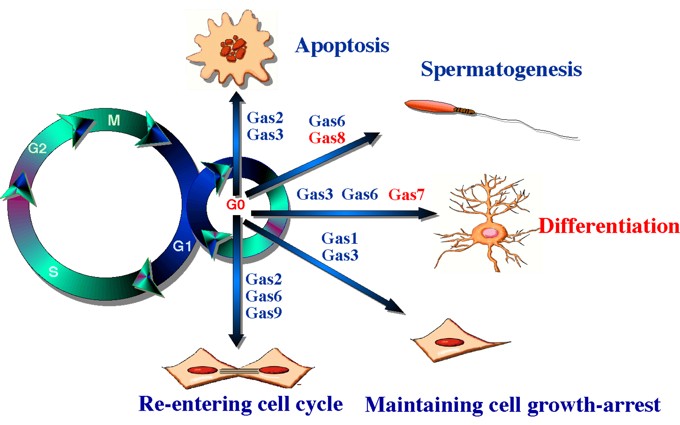
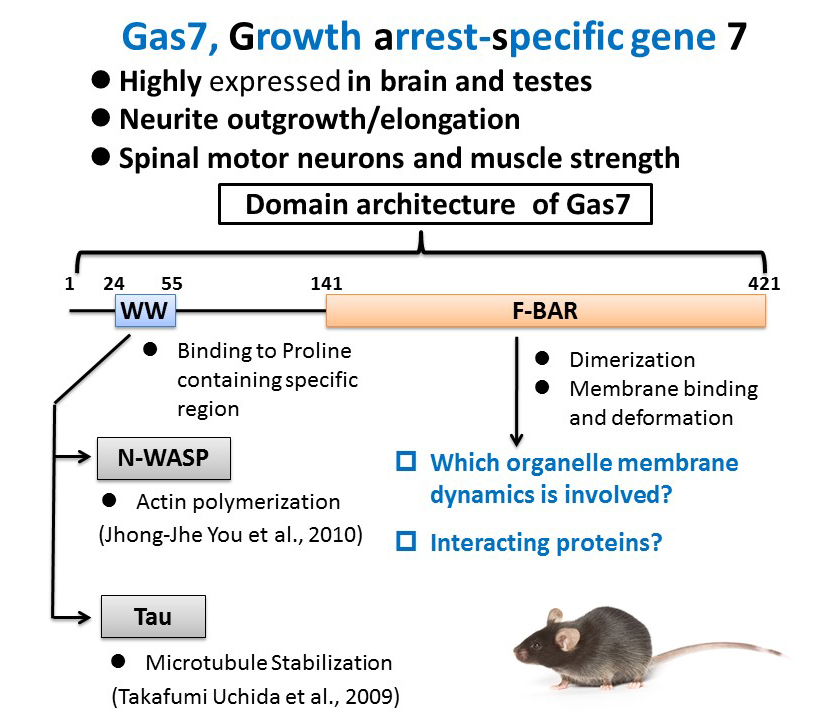
The mechanism controlling the maintenance of and departure from the cellular growth-arrested state, which could be regulated by the genes predominantly expressed during the growth-arrest or growth arrest-specific genes (gas), is not clear. To understand the functions of mammalian gas genes, we identified four gas genes (gas 7–gas 10) by using retrovirus-based "gene-trapping" vectors in the mouse NIH3T3 fibroblast and elucidated biological function of the gas7 by using molecular and cell biology, and animal model approaches. These studies showed that the gas genes mediate a variety of biological functions including cell survival, proliferation and growth suppression, cell differentiation and apoptosis. Gas7-deficient mouse demonstrates roles in motor function and muscle fiber composition during aging. Most recently, we have extended our gas work to human diseases, examining the roles of Gas7 involved in mitochondria homeostasis.