Nematode-Killing Fungi: Model Systems for Fungal–Animal Interactions
Dr. Hsueh, Yen-Ping - July, 2026
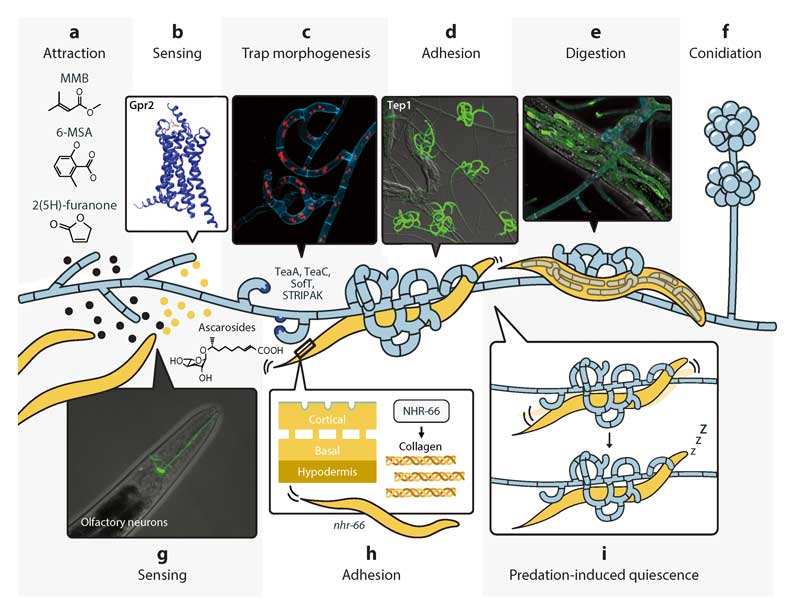
Predation is a powerful ecological and evolutionary force that shapes species interactions across the tree of life. Nematophagous fungi are specialized predators that use diverse strategies to capture and consume nematodes, Earth's most abundant animals. Two major groups of nematophagous fungi—nematode-trapping fungi and toxin-producing fungi, exemplified by Arthrobotrys oligospora and Pleurotus ostreatus, respectively—have emerged as tractable models for studying predator–prey interactions across spatial and temporal scales. Their interactions with the model nematode Caenorhabditis elegans provide insights into fundamental aspects of predation, including prey attraction, detection, and capture, while the genetic tools in C. elegans allow investigation into the prey's perspective. Additionally, studies of nematophagous fungi hold translational promise for the development of safe and sustainable biocontrol against parasitic nematodes. This review synthesizes our current knowledge of the ecology, evolution, and molecular predation mechanisms of nematode-trapping and toxin-producing fungi, highlighting these systems as invaluable models for predator–prey biology.