Human Endonuclease G Preferentially Cleaves Oxidatively Damaged DNA
Dr. Yuan, Hanna - May, 2026
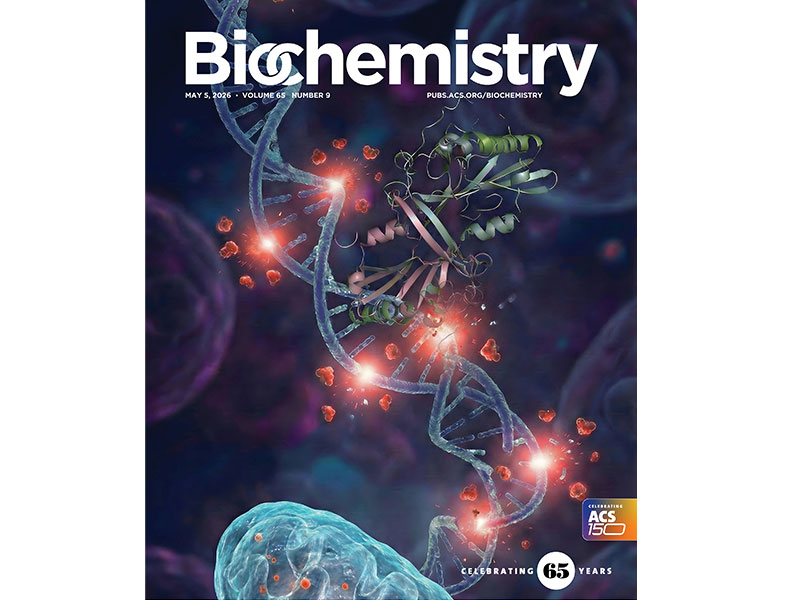
Endonuclease G (EndoG) is a conserved endonuclease implicated in mitochondrial DNA (mtDNA) replication, maintenance of mtDNA integrity under oxidative stress, and the removal of nuclear and paternal mtDNA during apoptosis and early embryogenesis. Despite its biological significance, the substrates targeted by EndoG and its cleavage preferences remain unclear. Here, we characterize human EndoG (hEndoG) across diverse nucleic acid substrates, including single-stranded DNA (ssDNA), double-stranded DNA (dsDNA), nicked and gapped dsDNA, modified dsDNA containing 8-oxoguanine (oxoG-DNA) and hydroxymethylated cytosine (5hmC-DNA), single-stranded RNA (ssRNA), and RNA/DNA hybrids. We show that hEndoG binds most of these substrates with only modest differences in affinity (∼10-fold), yet displays a particularly strong preference for cleaving oxidatively damaged DNA, including nicked and gapped dsDNA, and oxoG-DNA. Notably, hEndoG preferentially cleaves the strand opposite the gapped or nicked site, and it targets the complementary strand to the modified base in oxoG-DNA and 5hmC-DNA. Our structural modeling of hEndoG bound to ssDNA and dsDNA indicates that ssDNA is a favored substrate because its flexibility allows kinked conformations that position the scissile phosphate near the catalytic Mg2+ in the His-Me finger motif. Together, these findings support a critical role for hEndoG in preserving mitochondrial genome integrity under conditions of oxidative stress by selectively targeting and removing oxidatively damaged DNA.