A glycolytic intermediate gatekeeps global mRNA decay in Escherichia coli
Dr. Lin-Chao, Sue - August, 2026
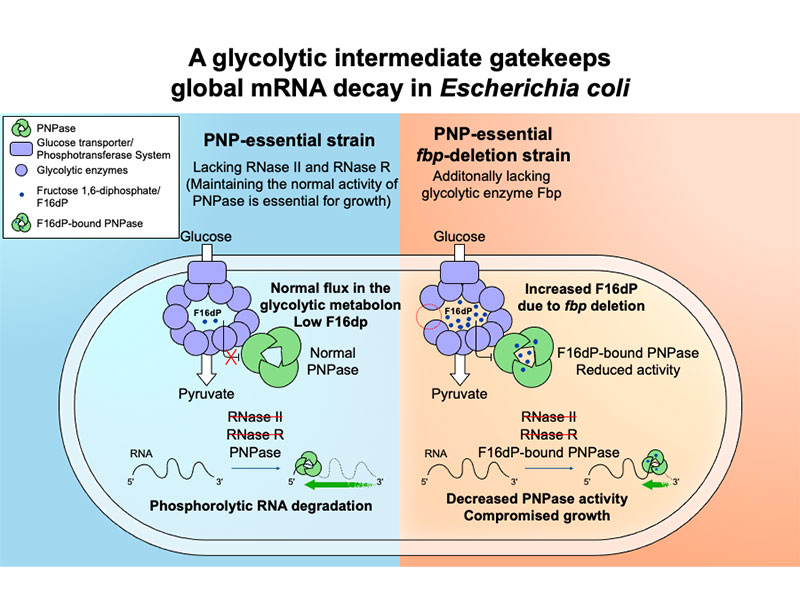
Polynucleotide phosphorylase (PNPase) is a highly conserved exoribonuclease crucial for RNA degradation across all domains of life. In bacteria, PNPase is found in multi-protein ribonucleolytic complexes that include glycolytic enzymes. While evidence supports a link between RNA degradation and glycolysis in Escherichia coli, the precise contribution of PNPase and the underlying regulatory mechanism remain unknown. Here we establish PNPase as a metabolic sensor that physically and functionally links glycolysis to RNA stability. We find that the intermediate of glycolysis, fructose 1,6-diphosphate, binds to and inhibits E. coli PNPase activity in vitro. This inhibition is confirmed in vivo, where increasing the levels of this metabolite compromises growth and globally prolongs RNA half-lives in an E. coli strain where PNPase is essential for growth. Bacterial two-hybrid and in vivo crosslinking followed by immunoprecipitation suggest potential interaction between PNPase and multiple glycolytic enzymes. Our results propose a mechanism where RNA phosphorolysis by PNPase, an energy-saving RNA degradation pathway, is directly modulated by a glycolytic metabolite and facilitated by metabolon association. This mechanism links the metabolic state of the cell to post-transcriptional control of gene expression. This regulatory system is likely exploited by other bacterial species relevant to human health, environment and industry, particularly those that rely on PNPase as the sole exoribonuclease.